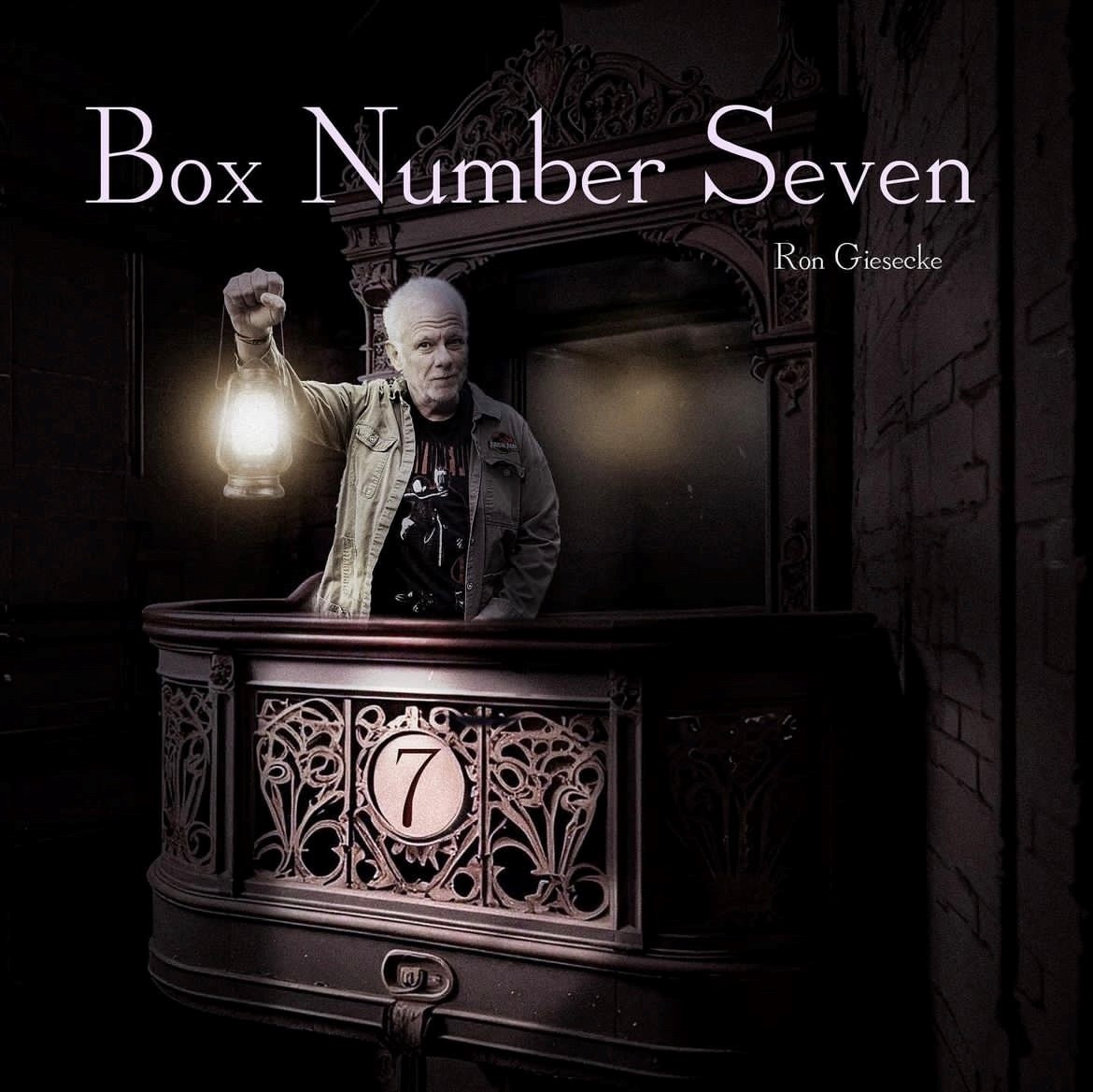
Northern California’s Most Notorious Moment

In May of 1892, John and Charles Ruggles conspired to rob a Wells Fargo Stagecoach just outside Shasta Ca. A man would be killed in the process and by July a clandestine community of men would circumvent the judicial process.

Right or wrong, the moment cast a pall over California–as the photographic remnant would be disseminated worldwide. Further speculation about there the stolen gold was, might be or is goes on even today.

On this episode, I am joined by Ryan McCloskey, most recently appearing on Discovery Channel’s Expedition Unknown with Josh Gates, to discuss the dispositional theories of the loot. Inquries about the information accrued, interviews or so forth can be sent to boxnumberseven@yahoo.com Ryan McCloskey can be found on InstaGram: @Redding_cemetery_tours

Ryan was featured on Discovery Channel’s “Expedition Uknown”. The Great Gold Rush Shootout.

Posted in Uncategorized | Leave a comment

Just a reminder. I have a podcast

Look, quite frankly, I should have just kept writing on the blog every day for the last few years. I might have made something of it.

But because I am artistically-labile, and move around the terra firma, skulking from one endeavor to the other, I wind up never amounting to a hill of beans; just one pathetic, half-start of an avenue that gets sealed off into a cul-de-sac of failure.

Since my latest ultimate failure is up and running, I’d like to ask you to listen to my Podcast. Here’s the upsides:

  1. I’m not doing politics–unless its a passing comment about its overall influence on the historical accounts about which I am carping.
  2. Its about historical events, and snippets of time.
  3. Episodes are mercifully short.

The downsides? Well . . . hopefully none.

I’m on all the platforms. You can search for “Box Number Seven” if you want an organic find.

But . . .

You can find me on:

Spotify Here.

YouTube Here.

Apple Here.

Amazon Here.

Posted in Uncategorized | Tagged , | Leave a comment

Like Father Like Daughter

Having just read Ron Chernow’s brand new biography, Mark Twain, I found myself stupefied by the amount of research involved in a project that ground out to 1033 pages.

It took me two weeks of guerilla-reading just to get through it (and by that I don’t mean it was a drudge), and the audio book is 44 hours long.

That’s right. An entire work week—plus overtime.

I basically covered my feelings about that book on my podcast here.  But I will say this: I’ve read three really great biographies about Twain, and I’m slowly plowing my way through the unedited (although curated) Autobiography that he rigged to release 100 years after his death in 1910 (I Know.  I’ve had 15 years to do it and haven’t.  I can’t really call myself a “Mark Twain Research Fellow” at my own ersatz university without doing so).

I’ll just say this—Chernow’s book made me feel like I was biographically there during the events in Mark Twain’s life.  He doesn’t avoid good or bad aspects of the man.  He was certainly no saint, but he was also, admittedly—a sinner.

And even though I was already aware that Twain lost three children and a wife before passing himself, to leave only his daughter Clara (and the source of my own daughter’s name), I didn’t realize the body blows, the timing, the sickness, the afflictions and everything else that came at him in a seemingly orchestrated series of salvos.

Aside from losing an infant son to the weaknesses and afflictions of premature arrival, Twain’s next loss would be his daughter Susy—who would die of Bacterial Meningitis in their Hartford Estate while Twain was overseas on a lecture tour—a tour that was attempting to pull his family out a bankruptcy he caused—his writing acumen, facility with the phrase and preternatural wit never translated into business sense—and his obsessive compulsions for investments drove an otherwise wealthy heritage into the red.

He would never forgive himself.

So when I read this account, the footnoting showed me that Susy had started a biography about her father at age 13, only to have it come to a sudden end—mid-sentence—as the ebbs and flows of life, college, music and transitions simply exemplify a “very last time” moment in time.

The Biography would be ultimately published—and it would include Twain’s commentary and annotations throughout—a posthumous tribute to his daughter, and—as one might guess—an attempt to relive his best years with her by lifting the hood on selected entries and exist in those moments in real time.  His brilliant prose draws a beautiful chasm between Susie’s occasional struggle with spelling, and the ridiculous cognitive penchant for written expression she possessed.

I snagged Papa An Intimate Portrait of MARK TWAIN by his thirteen-year-old-daughter Susy

At the bottom of the dust cover it says With a forward by her father. Now published in its entirely for the first time a century later.

It then concludes with: Edited with an introduction by Charles Neider.

And man, did he EVER—write an introduction—in fact, his 61-page jeremiad takes up an entire quarter of the book.

Now, I covered this issue long ago in this blog post—the Neider’s introduction makes my case for me.  I can pile on to him because he passed away in 2001, and therefore is unable to answer any correspondence I might throw his way.  So all I have at my disposal is posthumous slander.

His introduction is a long, analytical cross section of the book itself.  I actually bailed out of it when I realized how long it was—as I was fully expecting it to ruin the nuances of the back and forth between Susy’s look at her father, and Twain’s heartfelt and funny responses to much of it.  The book should stand alone and be read as a posthumous conversation between the two.

I realize that Twain fanatics like me all want to be counted amongst the pantheon (and believe me—I’m flitting around right now trying to find a hot-take on the guy, so I can show up in the bibliographies myself)—but this one is too personal. Neider even included an 1,100 word letter the Susy wrote in the throes of febrile meningococcal delirium—one of the last things Twain ever read of hers.  It’s erratic and disjointed, and perhaps a bridge too far in terms of literary decorum here—the biography doesn’t contain this, as it comes to an end long before infirmity was even a concept.

That being said, I’ll cover a couple of things that are endearing. Sure, it’s a 40-year-old book.  But I’m not going to spoil it.  The observations and twain’s responses are harmonious, and lovely.  At one point, Susy draws a bead on her father’s use of vulgarities. I maintain misspellings as they occur:

Papa uses very strong language, but I have an idea not nearly so strong as when he first married mamma.  A lady acquaintance of his is rather apt to interrupt what one is saying, and papa told mamma that he thought he should say to the lady’s husband “I am glad Mrs.—–wasn’t present when the Deity said ‘”let ther be light”’

Twain follows up with the following annotation:

It is as I have said before. This is a frank historian.  She doesn’t cover up one’s deficiencies but gives them an equal showing with one’s handsomer qualities. Of course I made the remark which she has quoted—and even at this distant day I am still as much as half persuaded that if that lady mentioned had been present when the Creator said “Let there be Light” she would have interrupted him and we shouldn’t ever have got it.

At one point, Susy decides to psychoanalyze her father, and identify the dichotomies in his approach to life:

Papa can make exceedingly bright jokes, and he enjoys funny things, and when he is with people he jokes and laugh a great deal, but still is more interested in earnest books and earnest subjects . . . .He is as much a philosopher than as anything I think, I think he could have done a great deal in that direction if he had studies while young, for he seems to enjoy reasoning out things, no matter what; in a great many directions, he has greater ability than the gifts which have made him famous.

Twain seems flummoxed at Susy’s analytical prowess:

Thus at fourteen she had made up her mind about me, and in no timorous or uncertain terms had set down her reason for her opinion. Fifteen years were to pass before any other critic—except Mr. Howells, I think—was to re-utter that daring opinion and print it. Right or wrong it was a brave position for that little analyser to take. She never withdrew it afterward, nor modified it.

I’ll not dive further into it. Just know it contains an eternity of affection, love and longing in a relatively small book.

Susy’s final entry was this:

July 4. We have arrived in Keokuk after a very pleasant . . . .

And it appears Susy’s effort would never be re-joined.

Twain stares at this final entry, and attempts to rationalize the reasons Susy never brought her pen back to the book.  He writes a paragraph so powerful, and speculative, and grieving.  Any man with a daughter, living or not can feel the power in the man’s regretful observation.

I’ve always said—his best work is out of the mainstream, and this paragraph is one of his best.

I’ll let you go find it.

Posted in Uncategorized | Tagged , , , , | 3 Comments

Same Blog, Different Name

I have decided to change the name of my nearly-dormant blog to match that of the Podcast upon which I have embarked. I do expect the blog to be more diverse in terms of content, but I need the cohesion to feel less-schizophrenic in my pursuits.

In fact, I’ll probably be posting again more frequently, now that I’ve narrowed the focus of the podcast to a manageable, on-line pursuit.

Posted in Uncategorized | Leave a comment

Obituary: Marlene Giesecke–closing the tabs on an amazing life.

She was the daughter of George and Ellen Davis.

Marlene Esther Giesecke was born February 20, 1937, and entered into her eternal rest on December 10, 2024, age 87.

She is survived by her three children: daughter Cynthia McAninch, son, Ron Giesecke, and daughter Denise Bethany. She is also survived by one remaining sister Kathleen Lund of Omak Washington.

She is also survived by seven Grandchildren, Seven great grandchildren, and one great, great grandchild of recent days.

Marlene was born in Iowa, but ultimately made it to California where she attended junior high and high school, ultimately graduating from Garfield High School in Los Angeles in 1955. Her daughter, Cynthia would arrive in the midst of her first marriage— to a one Hugh Isaacs, which would ultimately end in divorce.

In 1966 she married Fred William Giesecke, who was 18 1/2 years her senior. from that union would proceed Ron and Denise Giesecke—17 months apart.

After seven years in the Los Angeles area, the family moved to Anderson, California—particularly the Happy Valley area —where she would ultimately become a teacher’s aid, sometimes working in the classrooms of her own children at Happy Valley, primary and elementary schools.

This would proceed for a number of years with many civic involvements, primarily Ron’s Cub Scout activities, and parent teacher organizations. She would be involved in medical first aid classes, auto extrication drills and CPR.

In 1980 she would come to put her children in a private school: Shasta Christian Academy, and would later become preschool and kindergarten supervisor there. She would also become a charter member of the home church, Bible Temple until its very last day.

Her soaring Soprano voice would carry on way into her 70’s until the onset of respiratory limitations would limit her vocal parameters. Not being able to sing bothered her greatly, but was only really detectable in the subtext of her voice when discussing it. She didn’t want to taint the joy of others. She never did. And she never would. She carried her burdens quietly—an act of ultimate love.

And no one will ever sing Via Dolorosa as amazingly as her. Ever.

Her influence on every child that came into her life was immense, and meteoric, insofar as many of those little children remember her to this day and recall her gigantic influence on their life during their developing years. There was no job on planet Earth as she loved more than working with those little souls. And they remember her fondly.

Her own children—whom she taught to read, will say “amen” to this.

The other love of her life, besides her family was crocheting. The last 50 years will testify to nearly thousands of crocheted projects that flowed out from her creative handiwork, nearly incessantly and without creative limitation– – health issues notwithstanding. In recent days, her son, Ron has had conversations with people who have testified to still owning the blankets that she made for them 41 years ago, when they first had children. And it was the love of newborns and the love of life that drove her motivation—to always want to underscore the beauty of childbirth—with artwork that was made in love. She continued to make these for graduations, and for other significant life events as they arose. And they arose all the time because, Marlene never met a stranger. If she managed to get your name, address and birthdate, you would inevitably find a card in your mailbox from her at some point… And she never forgot you.

Her life was one selfless act after another, with no thought for her own well-being beyond essentials. She selflessly worried about her children into their 50s without regard for their own expected . . . well, you know how moms are.

In 2020 during the appalling Covid lockdowns, Marlene fell and broke her femur, resulting in the need for surgical remedy. This process, happening at 83 years of age would forever alter the course of her life. She would never drive again, although she held out the protracted hope for doing so. She would never really again walk independently without the use of a walker. And this was significant, because up until that moment, her mobility, despite her age—was her ace up her sleeve– – she would literally care for elderly people younger than her that were less mobile, and take them to their appointments, obligations and make sure they got home safely to and from the doctor. The moment she was unable to carry out that mission was really Ground Zero For a section of life that would usher in the most unpleasant of days—and most likely fostered a desire to shed the wicked chains of infirmity once and for all.

Yet, she carried on; making blankets, passing them out to birth centers, to be handed out to single moms that had no sense of compass—up-or-down about what it was like to raise a child. She donated blood up until the moment she no longer could; she held records at North State Blood Center for the amount of plasma that she managed to donate over a period of many years —decades even—and it would probably fill up a Midwestern grain silo if it was ever calculated.

Attempting to galvanize everything she was into a few simple paragraphs is simply impossible, and really not the product of this writer’s laziness. Had she not possessed the level of humility she did, it would be easy to write, but it is her humility that is now posthumously revealing to her family so many things about her—as her effects, photos and papers are just now bringing more of her amazing life into relief. She accomplished very much, and never bragged about it. She affected the lives of countless people and never reminded anyone of it –-It was in fact, they who came back to remind the family exactly how important she was to them.

Her final years were supplemented with frequent visits from her granddaughters, Emma and Clara, whom grandma was always calling “on the sly” (in other words, something cool she had going with just them), and having them bring her things like watermelon, applesauce and of course—yarn. And having them deliver those crocheted masterpieces wherever she directed them to go as well.

At the time of her death, three of those blankets were yet undelivered—reverberating in the back of her granddaughter’s car. A reminder that these moments will never be forgotten—and yet will never be repeated. The saved voicemails on their phones will have to do. At least “until that day.”

To the world, she was old. To those closest to her, she was ageless and vital.

In fact, the death of an 87-year-old woman in this day and age can result in the most unheard drop in life‘s pond, with no one paying attention. Generational distractions can see even much younger souls than hers easily forgotten by the time death comes to the door.

Such as not the case with Marlene Giesecke. And it was the underlying joy she carried at that level that made her unforgettable. Her abject selflessness, humility, devotion to God and desire to see her Savior on the other shore was who she truly was.

And as a matter of fact, is who she remains at this very moment –-young again, free of the inhibitions of physical infirmity, and yes, sitting in a recliner with a bag of brand new yarn, crocheting the ultimate Afghan.

And singing Via Dolorosa one more time.

Posted in Uncategorized | 3 Comments

Add “Podcaster” to my list of whatever it is I am

So a while back I stated to realize a couple of things:

  1. Western Civilization is just about finished.
  2. Podcasting would be my best way to manage Zeitgeist inflection-points that emanate from living in a suicidal culture.

Also, Podcasting is kind of “where it’s at” right now. I’d rather listen to podcasts than the news. I hate the news. I hate journalists in the aggregate, and realize that the definition of what they are have managed to be redefined the same way a WHOLE LOT OF WORDS Have been changed in the last few years.

Anyway. Despite the fact that the United States is at its Nadir, and in the hands of lunatics, I prefer not to give voice to them. Just like this blog, politics isn’t the focus. There’s no point.

My outlook is eschatological–and so at least I can look around me and maybe point to the fabric of what matters. Maybe talk about things that seems disconnected, but are really ultimately connected–by fate, judgment, and the consequential choices of man in the short term.

I also hope it’s entertaining. Come listen. You’ll probably laugh, and maybe learn something along with me.

Spotify link is here. I’m on all the major Podcast platforms, however.

Posted in Uncategorized | 2 Comments

New Show On Deck (Pun Intended)

November 1st marks the first, no-holds-barred re-emergence to the stage for me since the Spring of 2021. The last set of shows I had, it was 113-degrees, the black-box theater had an exclusive hold on swamp-cooling, and the infernal roar of a box fan removed whatever silence a dramatic pause would have offered.

This year, I’m gunning for winter weather, and a larger venue. Somehow, The Riverfront Playhouse a few blocks from home not only thought the idea of me performing there was nifty, but encouraged me to ink a deal for the place.

Mind you, the entire brainchild is mine; the routines, the by-play, the undercurrent of angst and general zombie-like acceptance of the national Zeitgeist. Oh, and also, I am featuring a routine I put on the market 20 years ago–one in which I managed to take a rather chaotic and fractured genre of card trick, called the “story deck” and make it into a sentient retelling of Dickens’ A Christmas Carol.

Cool then. You can find out more about it here. And if you’re going to be in the area, come see me. Hopefully the act is half as good as my Photoshop skills on the poster. (click on it)

Posted in Books, Card Tricks, Entertainment, Writing | Tagged , , , | 3 Comments

Looking for People Still Looking For Erdnase

Go ahead. TRY to say it’s real.

One thing I’ve learned over the years is, that if the inclination ever comes upon you to start pontificating and verifying a new theory in a long-held-and-ever-so-precious set of legendary beliefs, one can also expect a level of blowback.

Gallielo figured this out, and Socrates did too, as he gulped down the Hemlock of Enlightenment on his way off the anthropological turnpike.

About seven years ago, a guy walked into thrift shop in Fresno, California and said “hey that 2 dollar photo looks like Billy the Kid playing croquet.” He had zero idea that the cognoscenti was going to mobilize like white blood cells and attempt to take him out at the knees. It turns out that only ONE known picture of Billy the Kid was in existence and held the attention of the historians, the collectors, and the world in general. ANY attempt to dilute the status quo of the clandestine is an act of war. Don’t believe me? Read this rundown of experts, expressing their near delirium tremens that this thing could be valid.

All that was a set up to write about a new film  Looking for Erdnase. A film that has nothing to do with William McCarty, William H. Bonney, or any to her other names used by young Billy–unless he happened to be a notorious card cheat and also happened to be around in 1902 to write a book.

Now, to those not familiar with magicians, card tricks and the bedrock literature that makes them tick, understand, one book has gained legendary status; a 1902 text that not only explains for the first time in print, card cheating techniques and feats of sleight of hand, but also carries with it a DB Cooper-level of mysterium—no one knows who wrote the book.

Thus, theories abound, mostly centered around the curious and apparently non-existent surname of the author, “Erdnase”–or more to the point, S.W. Erdnase.

One day, someone noticed that an anagram of the name in reverse would spell E.S Andrews, and the prognosticators have been flailing away at forensic spelunking expeditions ever since. Apoplexy has been in great supply.

So when a young German filmmaker decided he was going to make a movie about this issue, I had great fear that his youth and inexperience would see him trying to close the book on the subject–or try to be too cute by half. Hans-Joachim Brucherseifer did nothing off the sort.

In fact he did something that was smart: he made a film that presents the mystery and majesty of the shrouded writer and allows non-magicians to become wrapped up in the story. For the most part, it covers four main theories–all prevalent, all valid and all within the margin of plausible error.

The foreward to my Dover paperback edition has an essay written by the late Martin Gardner–who emphatically tries to present the author as a serial killing whoremonger named Milton Franklin Andrews. He does a marvelous job at convincing himself that this was case-closed, but the fervor in which he pronounces the issue to be resolved always bothered me. The movie covers this respectfully, and gives Gardner the credit he deserves for his passion and knowledge.

What’s interesting is, there are four camps of thought laid out between the numerous magicians and researchers that bring in commentary in the PBS sort of way. All of these people are credible thinkers, to include Jason England, who owns perhaps the largest collection of the 120 year old text, first edition. But even he has his biases like all of us.

The point being, the film is a snapshot of a continuing and perpetual conversation that has resided in the single longest conversational thread in all of magic’s on-line forums (some poor guy named “Roberto” asked a simple question in 2003, and 19 years later, none–to include me–can seem to shut up about it). It attempts to solve nothing–it just tries to illuminate interest for outsiders, and show that yet another rabbit hole of intrigue exists, in the event that someone gets bored with pursuing Jack the Ripper, The Lindbergh baby, or Jimmy Hoffa’s corpse.

I give the film four out of five stars for the humility in the effort and commend Mr, Brucherseifer for a job well done.

Posted in Books, Card Tricks, documentaries, Movies, Uncategorized | Tagged , , , , | Leave a comment

Faith, Hope and “Your Love:” Lari Basilio’s latest album.

Somewhere along the line, the guitar instrumental album became a hackneyed effort—at least as far as the electric guitar was concerned. In the 1980’s, a plethoric cavalcade of them were presented, and it seemed that most of them were hastily arranged vehicles meant to display otherworldly shops, hypersonic speed, and a chance to copy Yngwie (who copied Richie), and cite classical composers as the reason they play diminished sweep arpeggios.

Sure there was Steve Vai, but his electronic saturations and lack of bottom-end feel on the low notes can wear on a guy, no matter how good he is.

Vinnie Moore was the first one that ever showed me that it was possible to convey a joyful underpinning on the electric instrumental album without sacrificing the speed and/or conviction.

But somewhere along the line Lari Basilio came along and rearranged my entire paradigm.  You don’t have to know her to know that joy is the bottom rung of her musical ladder.  Yet she literately has everything a guitarist could ever want, speed, articulation, amazing rhythm skills, and even some highly-developed hybrid picking expressions that bring about a phrase unlike any other approach.

There is also no such thing as a superfluous note in her music.  The Impelliteri school of “a million notes per second” was all the rage once.  But imagine being able to peel forth with otherworldly skills, and land on a dime with near mathematic precision.  That’s exactly what a musical bean-counter would surmise.  And yet, the soul of her music in no way dies on the altar of precision.

Such is the case with her newest release, Your Love. The album opens up with “Fearless,” which sets a tone for the album, as she is the only one playing the opening expression. A straightforward song that builds underneath you as you listen to it. One minute you’re a spectator—the next you’re a passenger. It has timing changes and variance, but again the listener doesn’t feel the burden of the complexity—just the joy in what is being played so masterfully–and with ridiculous chops. Oh, and her writing ability is just stunning.

Brazilians.  Not sure what’s  in the water over there, but they crank out some crazy-gifted music-folk.

“Alive and Living” is the first song on the track that features legendary bassist, Leland Sklar, who, if it weren’t for his innate ability to work with anyone on the planet, would secondarily be hired just so his mosaic-grade-beard would appear in the video.  The song has a digital delay-based riff that becomes an amazing takeoff for the general theme, as well as a firebrand guitar solo.

At the end of the day, the entire record is populated with solid, soul-soaring music. Basilio takes her Purple Ibanez LB1 Signature guitar and builds a slow, contemplative case for her joy in “All to You,” a structurally beautiful tune with delicate phrasing—no easy feat for many guitarists.

But it’s the “you” and “your” in her music that really creates the bedrock for her inspiration.  She shies not away from her faith in God, which manifest itself so beautifully in the title track, “Your Love,” which has an intro any John Mayer fan would die for, yet goes so much deeper than anything in his catalog.  The song is literally the oasis on the record, and one can feel the sense of a down shift—not so much in tempo, but in terms of life’s urgency.

Lari Basilio’s latest shows that its possible to provide echoes of Eddie, John, Vinnie and especially herself, but at day’s end, her playing will always point north, and that “Your Love” is what will be found if one decides to follow those arrows.

Lari’s website can be found here.

Posted in Guitar, Music, Uncategorized | Tagged , , , , , | 1 Comment

Making the most of my rogue, photoshop SKILLZ

The last six or seven years has afforded me the opportunity to start plunging down various technological rabbit holes with regards to adobe products. Somewhere along the line I discovered that I did not like making movies, or editing video whatsoever. At least not in a long form fashion. I did discover, however, that I did like being able to retreat to editing the aspects of a single moment in time. Take for instance the picture I have uploaded here – – a take on a modern Mary Poppins. I called it in formally “arriving too late to save Mr. Banks”

Anyway, I said all that to simply say that I have an entire Instagram page dedicated to these endeavors. My hope is you will follow me there and find it interesting.

@gieseckelab

Posted in Uncategorized | 1 Comment