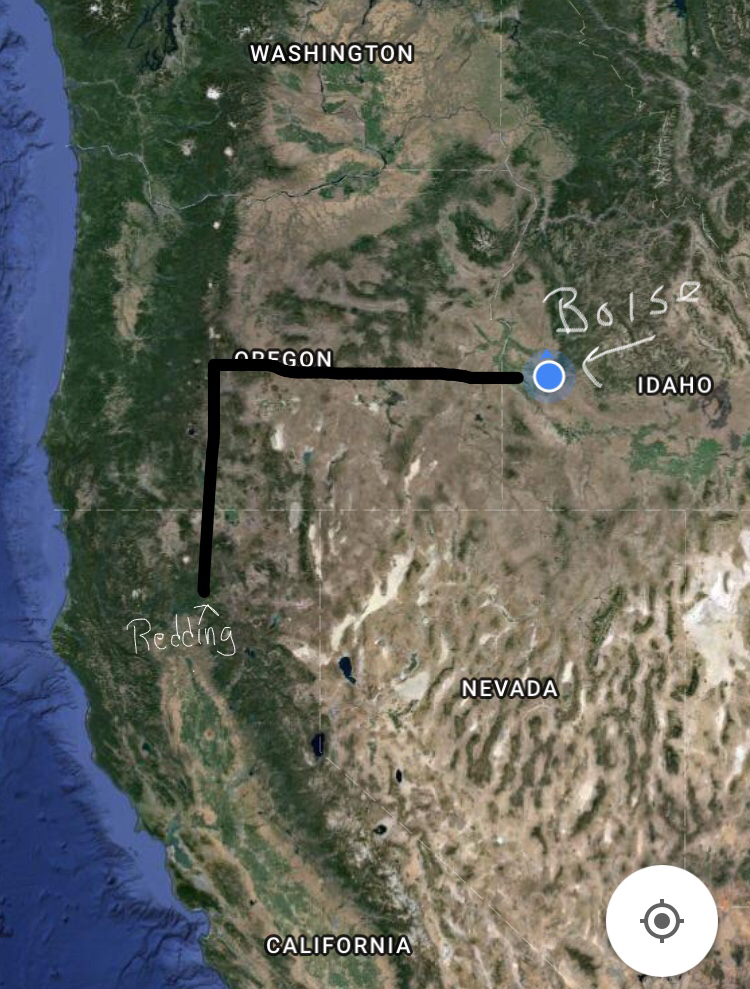
Somehow, making this trip commensurate with what I’m actually reading at the moment gives me a certain . . . um . . . continuity.
Somehow, making this trip commensurate with what I’m actually reading at the moment gives me a certain . . . um . . . continuity.
This is Lynette Noni. She really doesn’t need my help with promotions, but she IS one of the first people to find and follow my blog. Her Young Adult fiction work, Akarnae, is doing well. It’s also possible to get it on Kindle for free, and saving that, for a discounted price at the moment. I haven’t read it yet, but I do own it. And I plan on covering it here, soon!
One thing i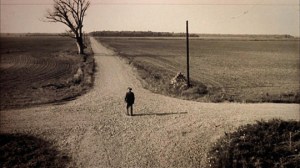 s for sure. When dealing with a legend–especially a Faustian legend, it appears multiple players are going to enter the picture battling for supremacy.
I learned this the minute I stated researching blues legend Robert Johnson, and the bedrock legendary, circa-1927 tale of him selling his soul to the devil in exchange for prodigious guitar and musical skill.
I’d always assumed the place was the corner of Highways 49, and 161 in Clarksdale, Mississippi. Clarksdale certainly feels this way,and I don’t blame them. Who wouldn’t want to be at ground zero for the explosion of the Delta Blues?
Then, I discover that Dockery Plantation has its own crossroads, and that Son House, Willie Brown AND Johnson used to chill there and play.
Right after that, I’ve got Son House telling the tale that Johnson met the nether-lout at Rosedale.
No matter what, I’m not going to win. Despite the fact that the entire trajectory of my book has an “alternate history” feel to it, some self-serving ninny is going to lay a siege upon my amazon offering with some ten-part exegesis about how I “am way off,” or “couldn’t hit the historical side of a chronological barn” or some other thing.
Then, instead of talking bout the merits of the book, I’ll be defending the parameters, dates, and times for an event that MOST LIKELY NEVER HAPPENED.
But . . . that being said, the research side of this is fun. Mainly, because I love the blues, I LOVE listening to old black men recall their memories along the Delta, and really–simply delving further than others.
The only thing that could make this better is a trip to Mississippi.
 I’m certainly hoping that when the time comes for me to have a book on Amazon, that the friends of mine that decide to review it will give their reviews some thought, and not try to front-load my sales with saucy, saccharine-addled reviews that have zero examination of the work.
I was recently reading the review for an inaugural work by a blogger—a detective novel. Without having to buy the book at all, I can tell, without even the slightest premontional skill, that the book is a dog; an overripe citrus-bomb waiting to take a chunk out of my bank account.
I can tell this for two reasons. One, is the author’s blog—a pedestrian, mid-tempo waltz through the banal and sleep-inducing. Not badly-written, mind you, but devoid of high points for the most part.
Second: the reviews that have done any decent post-mortem are all panning the detective work as a weak attempt at character development, and unrealistic parameters.
The author’s “friends” in the meantime, lost their minds and act like this thing was written on Mt. Sinai by the finger of God.
This is exactly what I don’t want out of my friends: a spastic, Gatling-gun of manufactured mania that contrasts so badly, it could’ve only been written by someone who can neither see my faults, nor think I am ugly—like my mom.
Here is what I am formally requesting to NOT HAPPEN:
Review by unknown patron:
I really did like this book. I can point out, however, that certain trajectories in character development left me hanging. The author clearly has a great idea here, and the book is a very good one. I would just have personally preferred some closure to the lives of a few ancillary characters. For a first offering, however, I see genuine promise in this writer’s ideas and technique. I will buy future work, knowing and having full faith that the contrast of time and comparison will improve the craft.
Review by smarmy-and-helpful-buddy:
The is the most AMAZING BOOOK I have EVER READ. I could not put it down for even on minute! It made me late for work twice this week! I also wound up suffering an iron deficiency because I was reading this book in lieu of basic nutritional needs! Anyone looking for a great story that will keep you on the edge of your seat need look no further. The world’s GREATEST AUTHOR is amongst us!!
As a matter of fact, I am officially banning the words “page-turner,” “Could not put it down,” and “epic.” I want no part of that. If my stuff is going to stand on the merits, it also needs the struggle of critical analysis.
 When my friend Steve managed to cajole me into reading Flannery O’Connor, I had no idea I was going to become as fascinated with her work as I have. I certainly never realized that a body of work as stark and sometimes bellicose would have a metaphysical third dimension to it the way it truly does.
The Terrible Speed of Mercy takes us on a fascinating, and yet concise journey of the very short life of O’Connor. And since I am new to her work, and have not yet completed the short stories, I found the quotes, references and Ibids to her letters the most compelling. It certainly takes a razor everyday wit to compose pieces in which the literary wit is an extremely slow burn—like a fuse. And in many cases, her pieces are the kind that leaves us with the fuse burning; we never do see the bomb go off. Others are the bomb that goes off without us knowing there was even the chance of detonation.
Her correspondence with others, sometimes under the duress of Lupus and the side-effects of prolonged steroidal treatments, is where her true colors shine. It becomes clear that the redemptive echoes, as well as her devout Catholic underpinnings in her work are not just the figment of imaginations that want to see the Virgin Mary appear in a misshapen pastry, but that she was deliberately and thoughtfully trying to galvanize every soul as one that starts on the road to redemption. Whether all her characters recognize this is another matter. And sometimes, it appears that the story is meant for us to recognize the lack of recognition in the responses of the character. These stories may be short. But they require effort truly absorb as a message. And her correspondence clearly shows that the self-professed literati didn’t always get it:
The stories are hard because there is nothing harder or less sentimental than Christian realism. I believe that there are many rough beasts now slouching towards Bethlehem to be born and that I have reported the progress of a few of them, and when I see these stories described as horror stories I am always amused because the reviewer always has hold of the wrong horror.
Her proximal upbringing and exposure to amputees, recidivist youth, and mental patients are what colors her work. Granted. Freaks do show up in her work. But sometimes the freaks turn out to be the ones that show us that we—the sinner—are as distorted in our hearts as they appear to be in their extremities.
And that can be—a horror story in and of itself.
 I’ve always been fascinated with the idea that books can be generated in retrograde–extractions from what I believe to be an extremely limited parameter: movies, or even worse, a television series. Not once, have I been tempted to grab a detective novel inspired by the Monk series that graced HBO many years ago. As much as I liked Tony Shalhoub’s portrayal of an obsessive-compulsive adjunct to the San Francisco homicide division, I am in no way compelled to venture a tortured attempt to synthesize his character in literary form–since that isn’t where it started.
Same goes for Pirates of the Caribbean. Barnes & Noble may carry a series extracted from the movies that were extracted from the amusement park ride, but at least the films were an attempt to make more complex, the implicatory stories found when one cruises the amusement park ride ride in a water boat. The icons are all there–including the moment a cinematically-anachronistic Jack Sparrow is trying to cajole a recalcitrant canine into coughing up the jail keys.
But then, I came across a book the other day, A Story of GOD And All Of Us. A novel based on the “epic” TV miniseries, The BIBLE.
Roma Downey and Mark Burdett were already running with a wheel in the sand with me by the time I saw the part where Abraham headed up the mountain with Isaac to cut him to ribbons. Horribly uncalibrated, and in my opinion, deliberately warped portrayal. If I can’t trust thee people at the Genesis of their literary beer-making, I’m certainly not going to venture their literature after the hops and barley stage takes us to John the Revelator’s Patmos paroxysms.
Say what you will about the Bible, and despite my own Christian beliefs, that is not the platform from which I am speaking here. I’m speaking of the craft of writing itself. What sense does it make to distill the Bible into a miniseries,and then attempt to make a cohesive extraction from that? I know I did not buy the book, because I have this quirky, two-word axiom by which I lead my life, when presented a consumerist conundrum of such dubious, efficacious merit:
Primary Texts.
I already have a Bible. In the same fashion, I already own The Hobbit.
I also have the cinematic attempts by Peter Jackson to express that book in moving avatar. A noble effort, for sure, but cluttered, overwrought and grandiose. But the book itself is the plumb-line; the reference point. No one in their right mind would attempt to extract a book called The Hobbit from the films.
“No one in their right mind” a prerequisite to said abstinence however, is exactly why it could still happen. I certainly hope not.
Ironically, many of the (at least American) fans of the BBC Series, Sherlock, probably have the impression that the series is some radical departure from the original novels. Yet, in the very first episode, A Study in Pink (originally Scarlet in Doyle’s books), we are first introduced to Watson as an injured war veteran, having earned his leave with battle-wounds from Afghanistan. He’s looking for a roommate. We are first introduced to Holmes by seeing him frantically beating on corpses in a morgue to flesh out lividity and bruising pattern issues. JUST LIKE THE BOOK. I could go into how usually, Watson has been presented as a sort of clown or comic foil in earlier presentations, and that has been the “norm” that never was. But I don’t need to now . . .
(Note: this blog post was written via voice to text on extremely bumpy bus ride headed out of Boise Idaho back towards Northern California)
This photo was taken February 5, 1865 in Washington DC, in the studio a photographer Alexander Gardner. I’ve been fascinated by this photo for years, part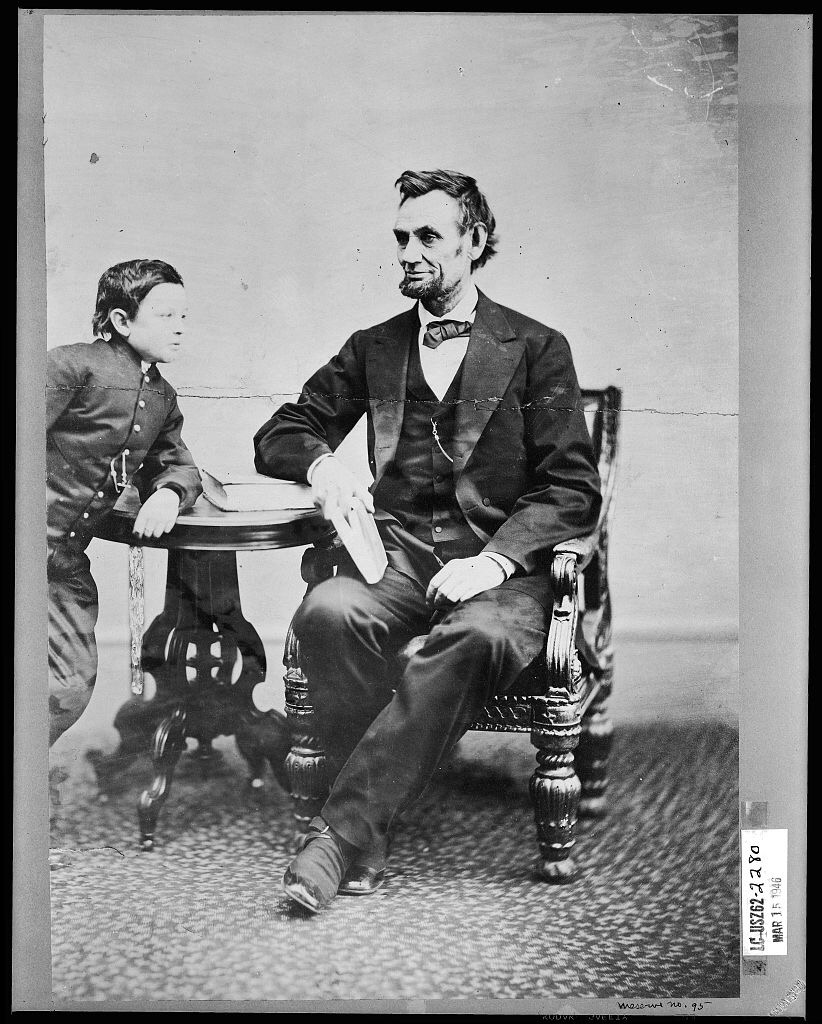 ly because of its candid nature, but also because of the fact that President Lincoln appears to be holding a book involving an interrupted thought, or an interrupted situation in which he seems to be posing for the photograph between intervals.
Now, it stands to reason that this could be an entirely manufactured scenario, but I also happen to like to think that the president, being a reputedly literate and bookish individual, was actually reading a book between shots and hamming it up with his youngest son Tad and it was captured by Mr. Gardner.
But the thing that draws my eye the most isn’t the candid nature of his interaction with his son. It happens to be that index finger that so conspicuously holds a place in that hardback volume that sits in the presidents right hand.
Sure there’s a haunted eyes, and the weatherworn face, and the Haggard look that bespeaks the accumulation of pressure from more from running the country… And possibly the unknowns that we’re to meet his future approximately two months later.
But quite simply I just want to know one thing: what was the president reading, why was he reading it, and what was so compelling and the volume that size it was holding his interest in the midst of a photographic session?
I’m doing this because it has been twice suggested to me that this would be a cool idea.
So I’m tossing this out there: who has read O’Connor’s short story A Temple of the Holy Ghost?
Thoughts? Observations?
 | unabashedlywombat8db… on My first published book–… |
 | Ron Giesecke on Ken Tamplin told me I’m going… |
 | Anonymous on Ken Tamplin told me I’m going… |
| Anonymous on Like Father Like Daughter |
| unabashedlywombat8db… on My first published book–… |
| Ron Giesecke on Ken Tamplin told me I’m going… |
| Anonymous on Ken Tamplin told me I’m going… |
| Anonymous on Ken Tamplin told me I’m going… |
| Anonymous on Like Father Like Daughter |